Every hour counts: the doctor helping ERs worldwide recognise ANE
A conversation with Dr. Dewi Bakker, child neurologist at Amsterdam UMC and one of the few doctors in the world specialising in Acute Necrotizing Encephalopathy.
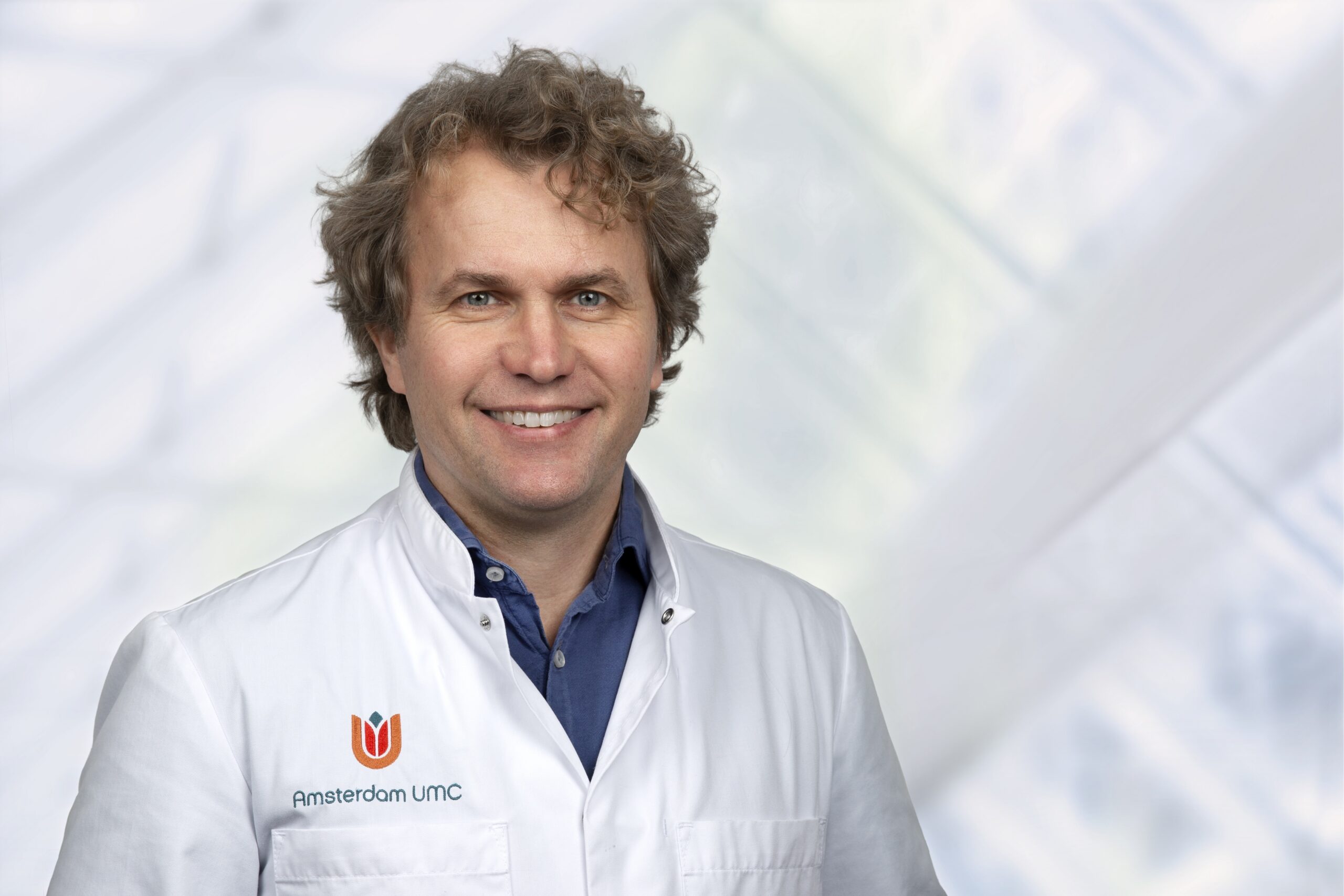
“It usually develops very rapidly after a common viral infection, such as influenza or other respiratory viruses,” says Dr. Dewi Bakker. “And within hours to days, a previously healthy kid can become critically ill.”
That is the reality of Acute Necrotizing Encephalopathy (ANE), a rare but devastating inflammatory disease of the brain. It most often strikes young, previously healthy children, and it moves fast. Dr. Bakker is a child neurologist at Amsterdam University Medical Center (Amsterdam UMC), where he has worked for 12 years, and is one of the few doctors in the world who have made ANE a focus of their careers. For ANE Awareness Day, we spoke with him about what the condition is, why the first hours matter so much, and the emergency protocol now reaching hospitals around the world.
What is ANE?
ANE is rare, but for the families it touches it is overwhelming. It usually develops within hours to days of an ordinary childhood virus. “It’s important to realise that it’s not the virus itself that damages the brain,” Dr. Bakker explains. Instead, “the disease results from an overwhelming inflammatory response of the body’s immune system.” In some children, he adds, “this response is triggered because they have an underlying genetic condition.”
The speed is what makes it so dangerous. “From a healthy child to a child in a comatose state – it can happen within hours,” he says. And because the early symptoms overlap with far more common conditions — an intracranial infection or meningitis — ANE is very hard to identify from symptoms alone. “The disease is really identifiable from an MRI pattern, abnormalities on an MRI that you can literally see,” Dr. Bakker says. Recognising that pattern quickly is everything.
“Early recognition of the condition really saves lives.”
Meeting the condition for the first time
Dr. Bakker came to ANE through a long-standing interest in inflammatory disorders of the brain, such as acute demyelinating disease. Early in his career, he was asked to assess a three-year-old girl with a suspected inflammatory disorder. “She was brought in with a quite acute onset of a decreased consciousness,” he recalls, and her MRI showed “very impressive changes of the brain” that he did not recognise. “I hadn’t seen such a condition before,” he says. “So I went to the literature to look at what this condition could be.” A senior colleague who had seen it years earlier confirmed the suspicion of ANE.
The case taught him a lesson he still carries. “It is very important that you have to recognise the MRI picture and diagnose quickly,” he says, “as immediate treatment definitely improves the outcome.” Then, within the same year, a second child arrived at another Amsterdam academic hospital with an unknown diagnosis and a severe decrease in consciousness. This time he recognised the MRI immediately. Two cases of an extremely rare disease within months — and, after a careful family history, he discovered the two patients were related. Today, he knows there is a cluster of families in the region with a genetic form of ANE. But the mechanism behind the disease remains largely unknown, and that has driven his work ever since.
The emergency protocol
The hardest part of a rare disease is that almost no one has seen it. “For many doctors, they will only see a child with ANE maybe once in their life, or maybe never,” Dr. Bakker says. “Without the protocol, it would definitely lead to delayed diagnosis and also delayed treatment.”
That is the problem the ANE emergency protocol was built to solve: a clear, evidence-based path that any hospital can follow the moment ANE is suspected. On treatment, Dr. Bakker notes that “high-dose corticosteroids are usually started as early as possible,” and that for a selected group of patients “additional immunomodulatory therapies may be considered” — the protocol sets out exactly which therapies, and for which patients. It also addresses genetics: some patients carry changes in genes such as RANBP2 that raise the risk of recurrent episodes, and identifying them supports family counselling, long-term follow-up and the preventive strategies the protocol includes.
What makes it unusual is that it was written for parents as much as for physicians. Families can keep a copy and hand it to a treating doctor — vital when they are travelling, or at a hospital that doesn’t know their history. “If there is a clear protocol in the hands of parents, that is evidence based, it really helps physicians that are not familiar with this condition to start the right treatment, or to do the right diagnostic tests,” he says. The protocol has already been distributed widely, with requests reaching Dr. Bakker from Italy, India and Australia. The next step is formal publication as a set of clinical guidelines — “a very important step,” he says, because “once the protocol is published in scientific literature, it can be found much more easily by other physicians, and it will definitely improve the care for children with ANE.”
“It is important to have clear recommendations — what a physician can do when a child with ANE comes to the emergency room.”
What families should know
For parents, one of the key takeaways should be that urgent medical attention is needed when a child develops reduced consciousness, seizures or severe confusion, “especially during or shortly after a viral illness.” Keep a copy of the protocol somewhere safe, hope never to need it, and present it to your treating physician if the moment comes. And despite the anxiety that such a situation will undoubtedly cause affected parents, Dr. Bakker wants families to know they are not facing this alone.
“Families affected by ANE, at this point, are not alone anymore. Patient organisations, clinicians and researchers are working together to improve awareness, to support families, and to advance research.”
A global effort — and where research is heading
None of this is the work of one doctor. “Because ANE is so rare, international collaboration is essential,” Dr. Bakker says, “and by sharing clinical experience and research data across countries, we can better understand this disease — and I hope, in that way, we can also develop more effective treatments.” The protocol itself grew out of that spirit. ANE International brought parents, patients and caregivers together at the ANEMone event in Montpellier, France, “and at that point it became clear that a protocol was urgently needed. It was really due to the initiative of the patients and their families.” The protocol itself was shaped by an international group of clinicians and researchers who treat and study ANE (meet the specialists here).
Looking ahead, Dr. Bakker sees progress on several fronts. As a clinician, his priority is to collect real-world data on how children respond to different treatments — the beginnings of a patient registry that could reveal, across many cases, what works best. Other groups worldwide study cell lines carrying the mutations or mouse models. “You have to combine all the scientific modalities to really understand the disease,” he says. The mechanism is not yet fully understood, but every piece of knowledge, in his words, “brings us closer to better care.”
One thing to remember
Asked what he would want any emergency doctor to take away, Dr. Bakker’s answer is simple:
“Awareness of this condition is essential. Most healthcare professionals will not know it, and will encounter only a few cases. Sharing the knowledge can lead to earlier diagnosis, faster treatment, and a better outcome for the children.”
Help us reach the next ER before ANE does.
- Share this article — especially with anyone working in emergency or paediatric care.
- Download the ANE emergency protocol.
- Support ANE research using the Donate button on the left of this page, or donate here.
Connect with the ANE community
ANE International was established in 2016 by families affected by ANE. These groups bring together families, clinicians and researchers worldwide.
For individuals and families with a medical diagnosis of ANE — shared experience, social and moral support.
Sharing and discussion of articles and reports on ANE and the RANBP2 gene.
Follow us on Facebook and Instagram for awareness campaigns, research news and family stories.